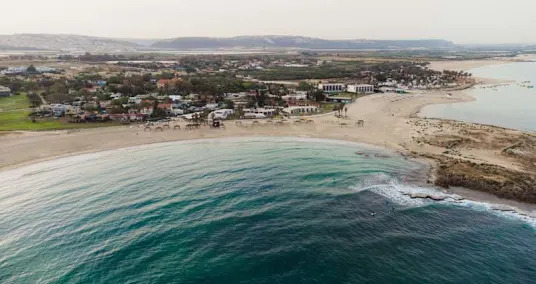
The discovery was made in an ancient shipwreck in the Dor Lagoon near the Carmel Coast, where archaeologists recovered nine pieces of unprocessed iron known as “blooms.”
Researchers from the University of Haifa said Wednesday that an underwater excavation off Israel’s northern Mediterranean coast uncovered what they described as the earliest known cargo of raw iron transported by ship, dating back around 2,600 years, Xinhua reported.
The discovery was made in an ancient shipwreck in the Dor Lagoon near the Carmel Coast, where archaeologists recovered nine pieces of unprocessed iron known as “blooms.” According to the university, the find provides direct evidence of how iron was transported in its earliest commercial stages.
The material was preserved in its original form, having solidified directly in a smelting furnace without undergoing forging or further refinement. Researchers said this distinguishes the cargo from later iron artifacts that typically show signs of shaping or tool-making.
Unlike copper and bronze, which could be melted into liquid form in ancient production processes, iron was heated with charcoal to produce a solid, porous mass. That mass was generally hammered to remove impurities and create denser material suitable for tools and implements.
The recovered blooms showed no indication of that secondary processing stage, suggesting they were transported immediately after production.

Earliest iron shipment discovered in ancient Mediterranean wreck
To determine the age and condition of the cargo, researchers conducted microscopic and chemical analyses.
Radiocarbon dating was also carried out on charred wood embedded in one of the pieces, helping confirm the timeline of the shipment. The findings were published in the journal Heritage Science.
Researchers said the cargo indicates that iron was being moved in raw form from production sites to other locations for further processing, pointing to a level of specialization in ancient manufacturing and trade networks in the Mediterranean.
The University of Haifa said the discovery provides new insight into early iron production and distribution practices in the region.
LATEST POSTS
- 1
 Russian strikes on Ukraine kill 5 people and wound 30 more
 - 2Scientists dove hundreds of feet into the ocean and found creatures no human has ever seen. Our trash beat us there
- 3Protester climbs on to balcony of Iranian embassy in London
- 4Fascinating Fishing Objections From Around The World
- 5Israeli strikes on Beirut, as Hezbollah and Iran attack Israel




- NASA is shooting for the moon. A guide to the Artemis II mission
- 'The Secret Lives of Mormon Wives' Season 3 premieres tomorrow. Here's what you need to know to catch up.
- Astronauts beam home Christmas wishes from International Space Station: 'I think we may be orbiting a little higher than Santa' (video)
- Holocaust survivor, descendants urge High Court to allow Gaza children medical access
- New York to require social media platforms to display mental health warnings
- 'Stranger Things' character guide: The nerds, the newcomers and the rest of the Season 5 cast
- Get Cooking: 15 Speedy and Heavenly Recipes for Occupied Individuals
- Netanyahu expects Iran's leadership to fall
- Is 'Veronica Mars' about to be your new binge-watch? It's now streaming on Netflix.