When you buy through links on our articles, Future and its syndication partners may earn a commission.

Europe's plans to develop a robotic lunar lander are moving ahead with the announcement of an Italy-led consortium that will build a key element of the spacecraft designed to secure European access to the moon.
The consortium will develop the Argonaut Lunar Descent Element (LDE), one of three main components that will make up Argonaut. The first mission for Argonaut is scheduled for launch in 2030 atop a European Ariane 64 rocket, with the European Space Agency (ESA) stating that the lander will play a key role in international lunar exploration through supporting the NASA-led Artemis program.
Thales Alenia Space in Italy, a joint venture between Thales and Leonardo, is leading the consortium. Core partners are Thales Alenia Space in France and Thales Alenia Space in the U.K., as well as OHB System AG and Nammo, the latter of which forms part of the consortium as strategic subcontractor for the propulsion system's main engine.
Argonaut will consist of the LDE, a Cargo Platform Element (CPE), and the lander payload. The assembled Argonaut will have a height of 19.7 feet (6 meters), a diameter of 14.8 feet (4.5 m) and a launch mass of nearly 22,046 pounds (10,000 kg), according to ESA. It can carry roughly 3,300 pounds (1,500 kg) to the lunar surface and is designed to land with an accuracy of at least 820 feet (250 m) for the first flight.
Earlier statements indicate a greater payload capacity of up to 4,600 pounds (2,100 kg) and a more precise landing accuracy of better than 330 feet (100 m) for the operational lander. Argonaut is designed to carry cargo, such as food and water for future astronauts, to anywhere on the lunar surface.
Giampiero Di Paolo, deputy CEO and senior vice president of observation, exploration and navigation at Thales Alenia Space, hailed the creation of the consortium as a milestone. "Under the leadership of the European Space Agency and alongside the consortium partners, Thales Alenia Space is playing a pioneering role to enable European autonomous access to the moon," Di Paolo said in an ESA statement.
"A European presence on the moon is a vision we at OHB have been working toward for many years. We are thrilled to play a pivotal role in this mission by contributing essential subsystems to the Argonaut LDE, helping to further advance Europe's space exploration capabilities," said Chiara Pedersoli, CEO of OHB System AG.
Argonaut's first mission is scheduled for 2030, with a first operational lunar flight slated for 2031. As well as supplies for astronauts, Argonaut is designed to be able to adapt to carry a diverse range of payloads, including rovers, technology demonstration packages, lunar resource utilization facilities or even lunar telescopes or power stations.
LATEST POSTS
- 1
 Two separate Israeli espionage cases uncover Iran-linked activities in Jerusalem, Ashkelon
 - 2The Iconic, Instantly Recognizable Plastic Chair That's Known All Around The World
- 37 Powerful Techniques to Boost Efficiency with Your Cell Phone: A Far reaching Guide
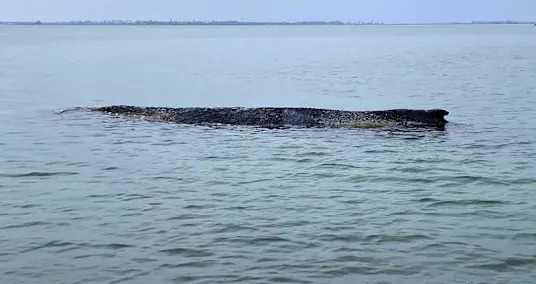
- 4Whale stranded off Germany for days found stuck again
- 5Kansas school officials report high student illness, dismiss early




- The architect of Iran’s military survival remains defiant
- ‘Extraordinary’ Iron Age war trumpet uncovered in England
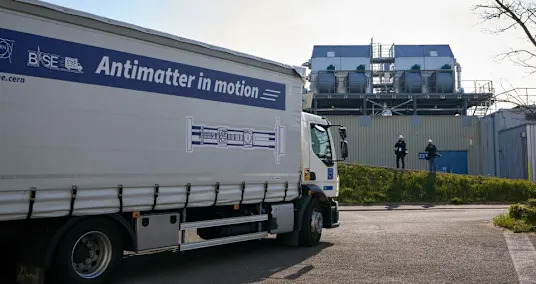
- Antimatter took to the road for the very first time. Here’s why it matters
- Vote In favor of Your #1 Compelling Female Producer
- IVE 2026 'Show What I Am' Tour: How to get tickets, prices, dates and more
- Europe must reinvent warfare for ‘era of shocks,’ NATO’s Vandier says
- Brazil's former President Jair Bolsonaro seeks house arrest for prison time citing health issues
- Ukrainian man arrested in Germany on suspicion of spying for Russia
- Nordic people know how to beat the winter blues. Here's how to find light in the darkest months